Hurricane Damage Restoration Highland Beach FL
Hurricane damage restoration planning for a Highland Beach, Florida property
Residential and Commercial Hurricane Restoration

Hurricane Damage Restoration in Highland Beach, FL

Titan Restoration Construction performs Hurricane Damage Restoration in Highland Beach, Florida for residential and commercial properties affected by hurricane-related water and property damage. Cleanup, drying, repairs, and reconstruction are developed around each coastal structure. Hurricanes and tropical storms can push wind-driven rain through exterior openings or expose interiors when roof and exterior damage occurs. Titan handles water extraction, moisture detection, selective removal, and interior rebuilding. Hurricane Damage Restoration addresses the combined storm loss, while Wind Damage Restoration is a separate category directed specifically at damage caused by wind.

Restoration Along Highland Beach’s Coastal Barrier Island

Highland Beach is a narrow coastal community between the Atlantic Ocean and Intracoastal Waterway, with oceanfront condominium buildings, waterfront residences, townhomes, and a limited number of other property types. Exposure can differ between ocean-facing, Intracoastal-facing, and interior sides of the same building. Wind-driven rain may reach balcony openings and perimeter walls, while water within a stacked structure can move around slab edges or penetrations. Titan evaluates the affected unit or residence in context, with attention to access, adjoining high-finish materials, and the direction from which water entered.

Review Titan's Hurricane Damage Restoration service or visit the Highland Beach service area page. Hurricane restoration addresses the wider storm loss, while Highland Beach Wind Damage Restoration remains a separate service focused on wind forces.

Moisture Detection in Stacked Coastal Buildings

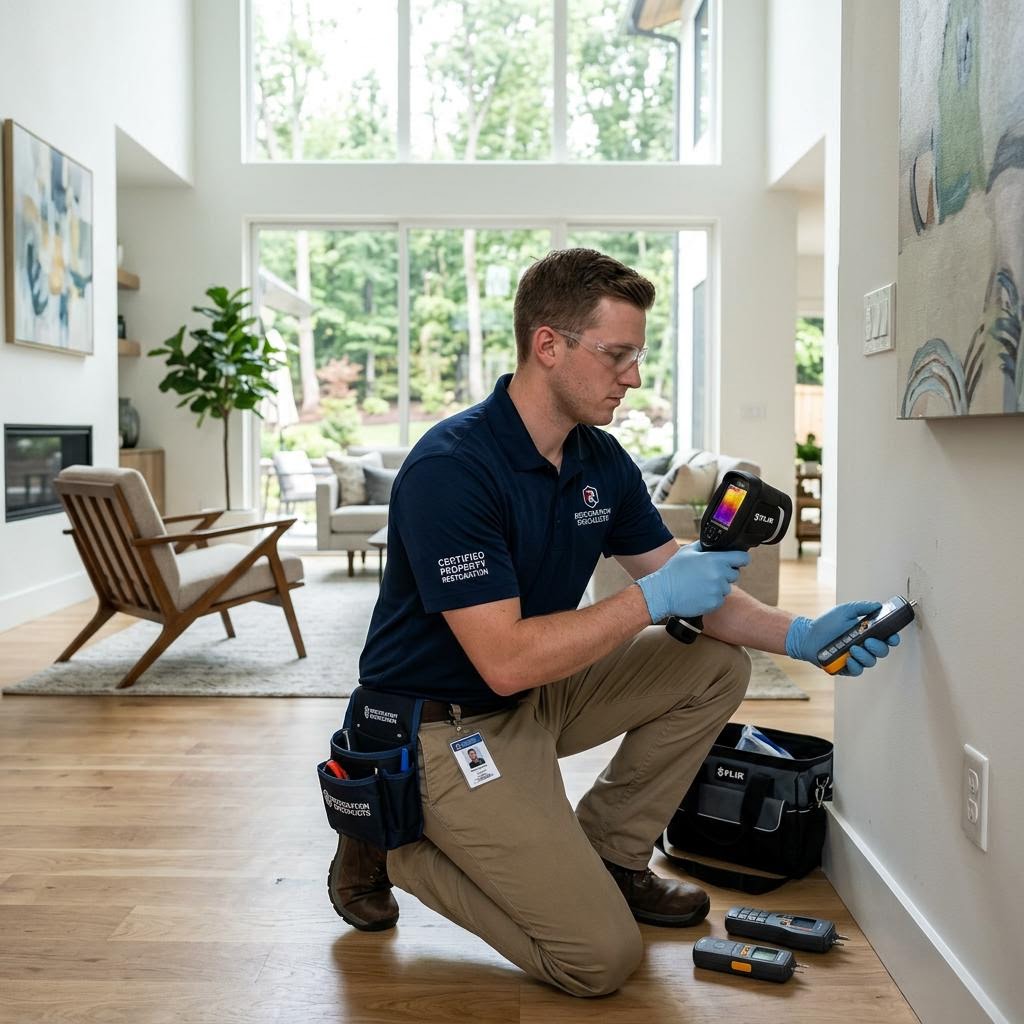
Water visible at one perimeter opening may spread laterally below a finish or vertically around a penetration. An oceanfront condominium can show dampness near a sliding door, at a baseboard several feet away, or in a lower ceiling. In a waterfront house, water may travel from an exterior wall into a bedroom, kitchen, or built-in cabinet area. Titan extracts accessible water and maps moisture to establish a realistic restoration boundary.

Managed dehumidification and structural drying are then matched to the materials and access available. Stone or tile surfaces can conceal affected setting layers or nearby porous finishes, and cabinetry can limit airflow at a wall. Moisture checks guide adjustments, selective access, and decisions about whether a component can dry in place or should be removed before reconstruction. Learn about Titan's Water Damage Restoration service and Highland Beach water damage restoration.

Perimeter Openings and Exterior Water Routes

Large glazed openings, balcony thresholds, exterior wall connections, and service penetrations receive substantial weather exposure during coastal storms. Damage higher on a building or at a roof area may also result in water appearing inside. Titan factors visible entry routes into restoration sequencing and can provide reasonable stabilization within its supported scope, while roof and exterior conditions receive appropriate separate evaluation.

Rain Exposure Can Differ Across One Building

Wind direction matters on a barrier island. One elevation can receive forceful horizontal rain while another side shows little visible intrusion. Water may also turn a corner at a balcony or follow a wall connection before appearing indoors. Titan examines the affected room and connected materials instead of assuming every unit or elevation has the same storm impact. This supports focused drying and limits unnecessary work in suitable dry areas.

Selective Cleanup Around Refined Finishes

Highland Beach interiors can contain stone floors, custom cabinets, wood finishes, glass, tile, wall coverings, and detailed trim beside ordinary drywall and insulation. Titan evaluates each material for moisture, physical damage, and reasonable restoration potential. Durable finishes may be protected and retained, while saturated porous products or damaged components may require selective removal. The goal is enough access for proper drying and repair without automatically expanding demolition into unaffected finishes.

Stabilizing Affected Areas for Focused Work

Loose finishes, exposed openings, or ongoing water entry can prevent an orderly restoration process. Titan reviews the immediate condition, establishes appropriate work-area protection, and undertakes reasonable stabilization that fits its restoration and construction role. Actions vary by site and access, and specialized exterior conditions remain subject to separate evaluation.

Controlled Drying Near the Ocean and Intracoastal

High ambient humidity can slow evaporation from wallboard, wood, cabinet materials, and flooring transitions. Enclosed condominium spaces can also restrict natural airflow. Titan uses dehumidification, structural drying, and moisture evaluation to manage the interior environment and track material response. Selective openings may be used where necessary to reach damp concealed areas, and reconstruction waits until the relevant assemblies are ready for repair.

Reducing Mold Risk Through Moisture Correction

Unresolved moisture in a warm coastal building can support mold growth. Titan reduces that potential by identifying water pathways, extracting water, drying affected assemblies, and assessing porous materials. Where visible mold or supported conditions require remediation, the scope can address those materials before rebuilding. The presence and extent are determined from the property conditions, not assumed merely because a hurricane occurred. When conditions warrant, review professional mold remediation and Highland Beach mold remediation.

Rebuilding Highland Beach Interior Finishes

Reconstruction after storm restoration can include drywall and ceilings, paint, trim, flooring transitions, cabinetry, kitchens, bathrooms, and other affected interior features. In a condominium, the repair may be concentrated near a perimeter wall or balcony opening. A waterfront residence may need coordinated work through several connected rooms or around built-in finishes.

Titan provides both restoration and construction, helping the repair team use details established during moisture detection, selective removal, and drying. Retained finish dimensions, cabinet edges, floor transitions, and access openings can be incorporated into a cohesive rebuild plan. The scope remains tied to the damaged interior and does not imply unrelated exterior services. Explore Titan's Construction & Rebuild services.

Service for Oceanfront Condos and Waterfront Homes

Titan serves Highland Beach condominium units, townhomes, and single-family residences affected by tropical weather. Residential planning considers common-area access where applicable, compact work routes, balcony-adjacent rooms, waterfront elevations, and valuable retained finishes. Extraction, drying, cleanup, and repairs are adapted to the particular residence rather than copied from a generic hurricane checklist.

Commercial Interior Restoration in Highland Beach

Commercial and shared-use interiors may experience water near entries, glazing, exterior walls, ceilings, or service areas. Titan can define work zones, evaluate finishes, extract water, dry suitable materials, remove damaged components, and reconstruct included interiors. Work is planned around the documented conditions, layout, and access available at the property.

Experienced Help for Palm Beach County Coastal Property

Titan Restoration Construction has 20+ years of experience in restoration and construction in Palm Beach County. The company is licensed and insured, 5-star rated, and A+ BBB rated. Its ability to connect moisture work, selective removal, repairs, and reconstruction supports a consistent hurricane recovery process.

Highland Beach Hurricane Damage Restoration FAQs

Can hurricane water move between Highland Beach condominium levels?

Yes, depending on the building assembly and entry point. Water may travel around penetrations, floor edges, walls, or ceilings, so moisture evaluation should consider connected accessible areas.

Are stone floors always undamaged when rain enters a condo?

No assumption should be made from the surface alone. Stone may remain suitable while water affects adjacent walls, setting materials, transitions, baseboards, or cabinets.

Why might two sides of the same Highland Beach building have different damage?

Wind direction, exposure, openings, balconies, and exterior connections differ by elevation. One side can receive sustained wind-driven rain while another remains comparatively sheltered.

Can Titan preserve custom finishes during selective removal?

Titan evaluates suitable adjacent finishes for protection and retention, then limits removal to the supported affected area where practical. Actual decisions depend on moisture, damage, and access.

What does dehumidification accomplish after a coastal storm?

It helps manage moisture in the interior air while affected materials are dried. Combined with moisture detection and appropriate airflow, it supports evaluation of how walls, wood, and finish assemblies respond.

Create a Highland Beach Restoration Scope

Contact Titan Restoration Construction to discuss hurricane-related water and interior property damage at a Highland Beach condominium, waterfront residence, or commercial space. Titan can help define the path from moisture detection and drying through selective repairs and reconstruction based on the conditions found.