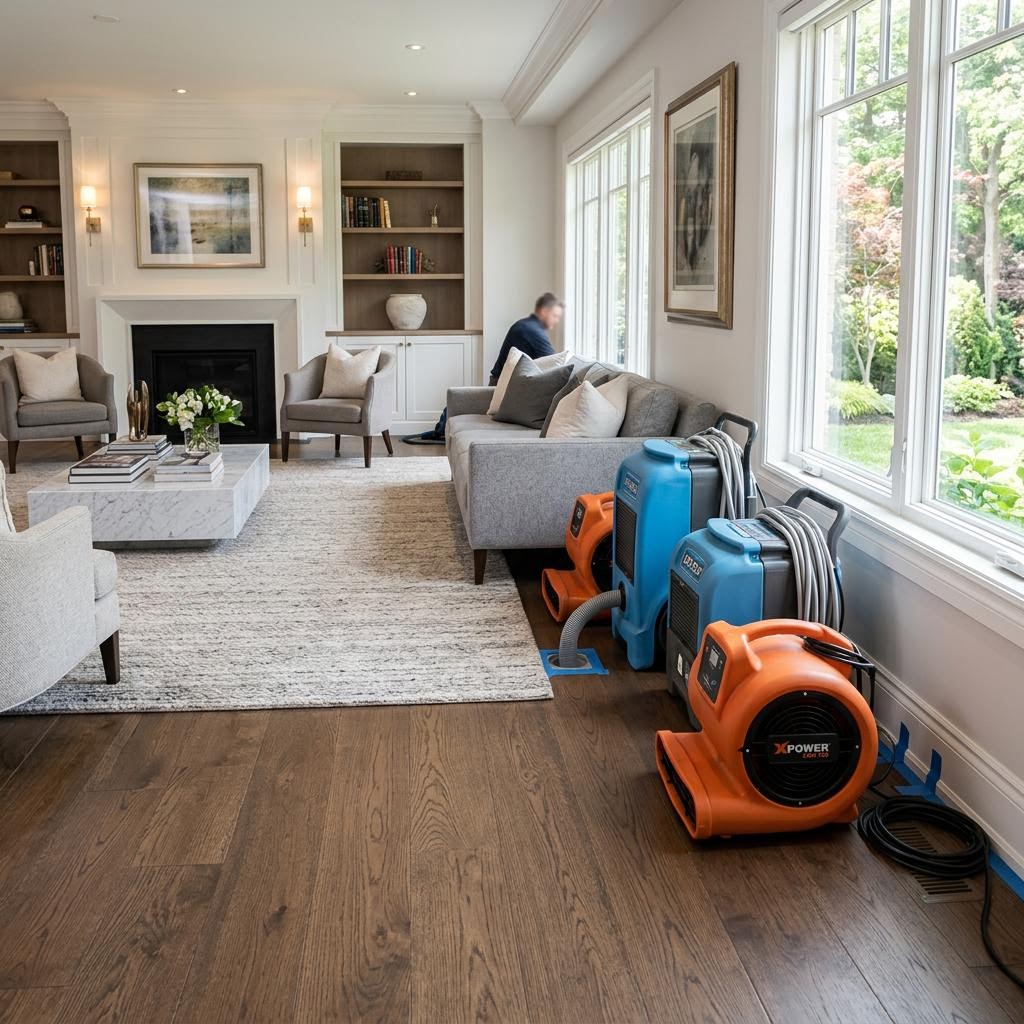
Why Building Age and Layout Matter
Warm, damp conditions can support growth on drywall paper, wood products, ceiling tile, and organic residue. In older or renovated buildings, multiple finish layers may hide the moisture route. A newer high-rise presents a different challenge: water may travel through a floor assembly or along service lines before showing in the unit below. Neither scenario should be reduced to the visible stain alone.
Commercial interiors add ceiling grids, partitions, displays, and mechanical areas that can interrupt a direct view of damp materials. The practical remediation plan connects observed growth with the leak history and building assembly. Source repair, drying, containment, removal, and cleaning are sequenced so the affected area is not merely covered by a new finish.
Clues Across Homes, Condos, and Workplaces
Visible mold-like growth, musty odor, recurring ceiling discoloration, bubbling paint, swollen wall bases, or flooring changes can signal a moisture concern. In a restaurant or office, stained ceiling tile may point to roof or mechanical water above. In a condo, a bathroom ceiling mark may relate to plumbing on another level. These are building clues, not a basis for health conclusions or definitive identification by sight.