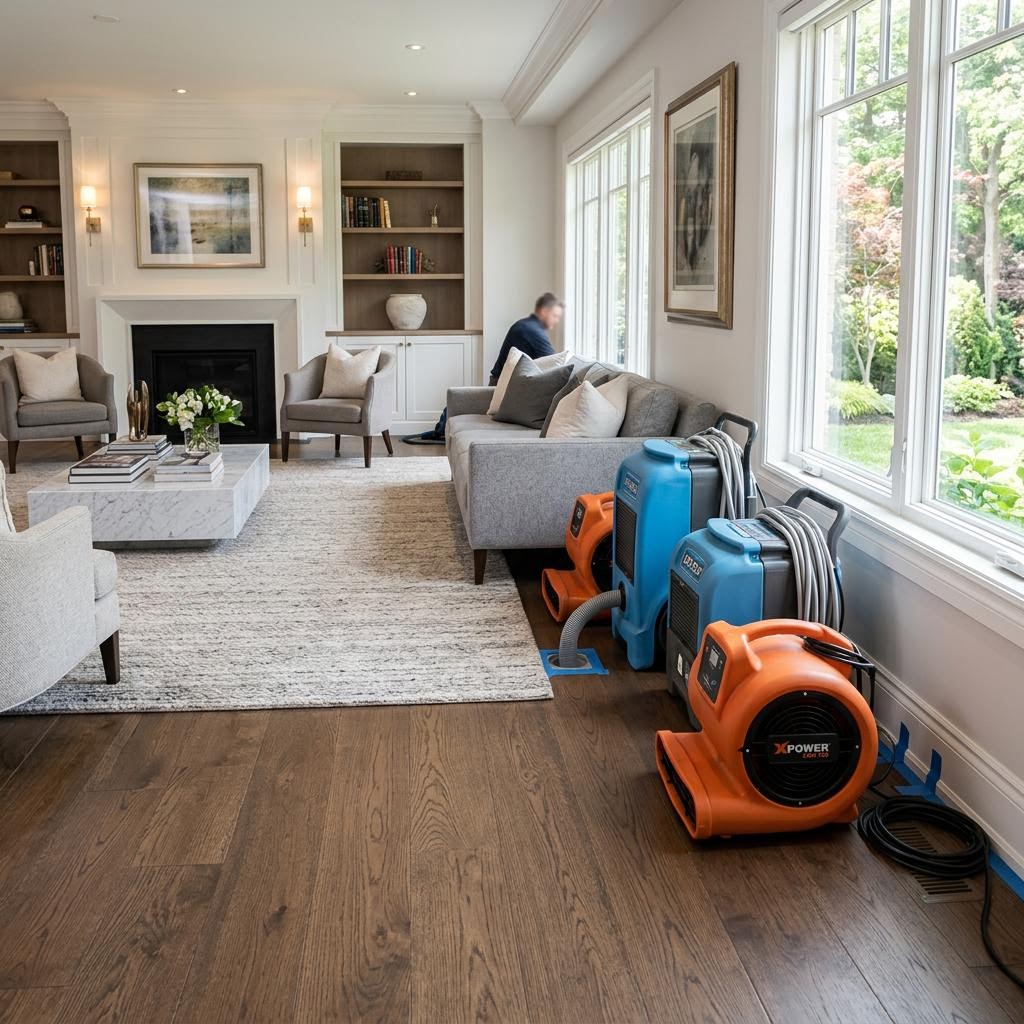
How Coastal Moisture Reaches Interior Materials
Warm, humid air can contribute to persistent dampness when it meets cooler interior surfaces, particularly near air conditioning components or exterior-facing assemblies. A separate leak can add moisture to drywall paper, insulation, wood products, or accumulated dust. When these materials remain damp, visible mold-like growth or musty odors may follow. In a condominium, the first clue may be staining on a ceiling even though the water began in another unit or building component.
A useful remediation plan considers both the material condition and the path moisture took. Simply covering discoloration does not address damp material behind the finish. Professional remediation establishes a controlled zone, provides access where needed, removes affected porous products that cannot remain, and cleans appropriate retained surfaces. At the same time, the leak, condensation, or exterior entry condition must be corrected so new finishes are not installed over an ongoing problem.
Signs a Condo Owner or Manager May Notice
Possible clues include a musty odor that returns when the unit has been closed, visible mold-like growth around a vent or wall surface, ceiling staining beneath another unit, bubbling paint near an exterior wall, swollen baseboards, damp cabinet panels, or discoloration at a sliding door. A prior plumbing event or rain intrusion also provides important context. These conditions can be limited or extend into concealed assemblies, so the remediation scope should be based on the actual building and affected area.