Water Damage Restoration Riviera Beach FL
Water damage restoration work for a property in Riviera Beach, Florida
Residential and Commercial Water Restoration

Water Damage Restoration in Riviera Beach, FL

Titan Restoration Construction provides water damage restoration in Riviera Beach, Florida for homes, multi-unit properties, and businesses. Our team helps control the water source, extract standing water, dry affected assemblies, locate hidden dampness, remove materials when necessary, and carry the project into repairs and reconstruction.

Restoration Across Riviera Beach

Riviera Beach includes coastal and inland homes, apartment and condominium buildings, marina-area properties, and commercial spaces. Ground-level releases can soak wall bottoms and cabinetry, while exterior water may enter through roof or wall openings. Older and newer building materials may require different drying and repair decisions.

Titan serves coastal homes, inland residences, multi-unit buildings, and commercial properties throughout the local area. Every water loss should be evaluated according to its source, how long materials have been wet, the path the water followed, and the materials involved. Learn more about Titan's broader presence on the Riviera Beach service area page or review the complete water damage restoration service.

Water Extraction for Riviera Beach Properties

A water loss in Riviera Beach can begin at a bathroom fixture, water heater, supply connection, or appliance and move quickly across a tiled room. In ground-level homes and apartments, water often reaches baseboards, cabinet toe kicks, and the lower edge of drywall before the full boundary is visible. Extraction starts with identifying the active source and removing standing water from reachable surfaces.

The next steps should reflect the building rather than a single visible puddle. Coastal homes, inland residences, multi-unit buildings, marina-area spaces, and commercial interiors can have different floor assemblies and access limits. Moisture checks around walls, cabinets, adjacent rooms, and transitions help determine where water traveled and which materials can be dried in place.

Drying Beyond the Visible Water Line

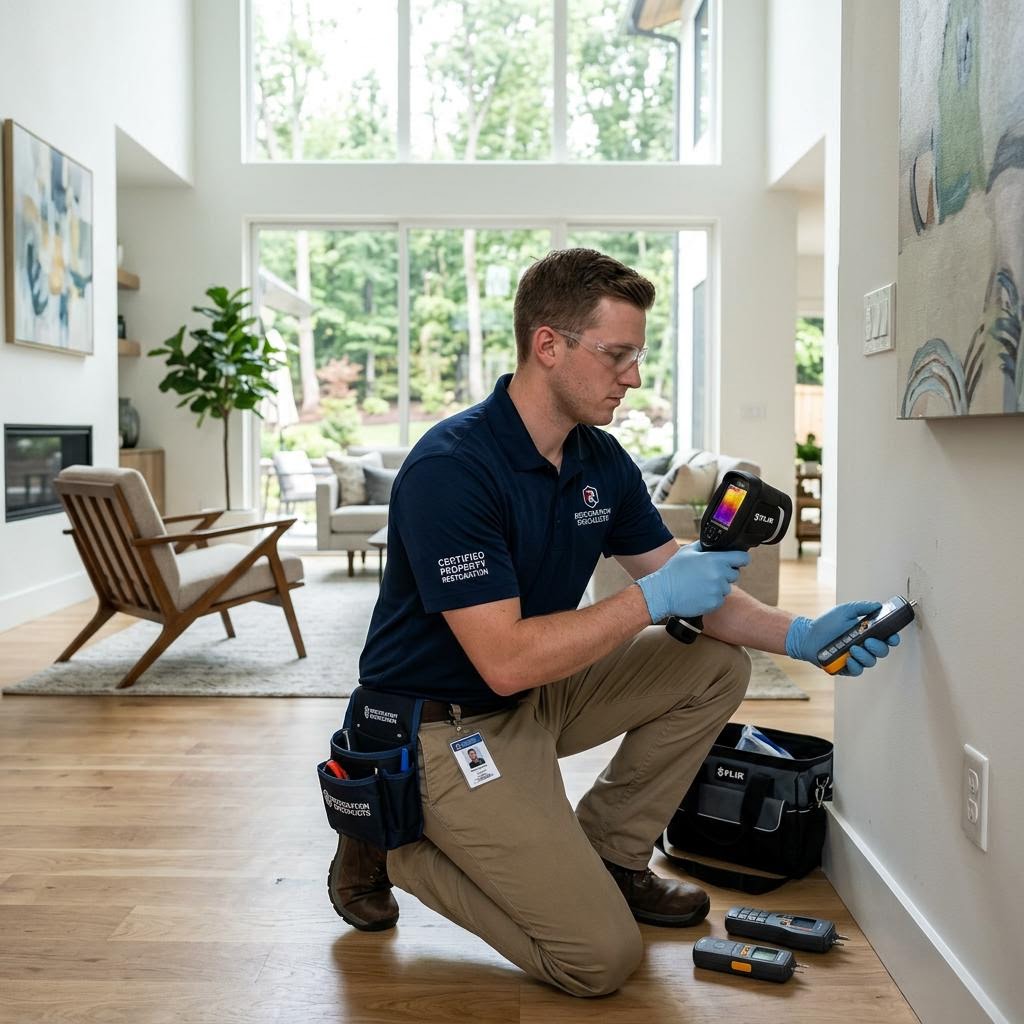
Drying addresses moisture left in materials after extraction. Air movement, dehumidification, and measured moisture readings can be used to reduce moisture in wet wallboard, framing, flooring edges, and cavities. Areas behind appliances or beneath cabinetry deserve attention because a dry-looking surface does not confirm that adjoining materials are dry.

In a multi-unit setting, the drying plan may include ceilings below a leak, shared walls, and rooms that appear unaffected at first. For a commercial property, equipment placement and work-area boundaries can be arranged around the interior layout. Monitoring provides a basis for changing the plan as materials dry instead of relying only on time.

Managing Moisture Before Mold Becomes a Larger Issue

Wet drywall paper, insulation, wood trim, and debris can support mold growth when moisture persists. The practical first step is to stop the water source, document wet areas, and dry materials that remain suitable for drying. Where materials have deteriorated or cannot be effectively dried, controlled removal may be appropriate before repair work begins.

A musty odor, discoloration, or repeated moisture near an exterior opening calls for investigation of the water path, not just surface cleaning. Wind-driven rain can enter at roof edges, windows, doors, or penetrations and collect low in a wall. Correcting the intrusion path and drying the assembly are important to a durable restoration. Learn more about professional mold remediation and Titan's Riviera Beach mold remediation service when mold-related work is needed.

Repair and Reconstruction After Drying

Once moisture conditions support rebuilding, the repair scope can address removed drywall, insulation, baseboards, flooring transitions, cabinet components, and finishes affected by the loss. Keeping the drying findings connected to the repair scope helps avoid closing an area before the affected assembly has been evaluated.

Older and newer Riviera Beach buildings may use different wall and floor materials, so repairs should match the actual construction and the affected footprint. Reconstruction can be planned from selective repairs through broader interior restoration when water has crossed several rooms. The goal is to restore functional, properly finished spaces after mitigation is complete. Explore Titan's Riviera Beach construction and rebuild services.

Homes, Apartments, and Coastal Residences

In a Riviera Beach home or apartment, a kitchen leak may stay under cabinets while a toilet overflow travels into a hallway or bedroom. Ground-level water can wick into wall bottoms and trim. A room-by-room review helps distinguish the source area from the full affected area, including closets, adjoining rooms, and lower cabinet sections.

Commercial and Marina-Area Interiors

Businesses and marina-area properties can face water at storefront entries, utility rooms, restrooms, roof openings, or plumbing fixtures. A restoration plan can separate wet work areas, assess ceilings and partitions, and coordinate drying with the practical needs of an occupied interior. The scope should account for where water moved above, below, and behind finishes.

Rain and Exterior Water Intrusion

Heavy rain and coastal wind can direct water toward roof edges, windows, doors, and exterior penetrations. Water may follow framing or collect inside wall cavities before it stains an interior surface. After exterior intrusion, inspect the entry path and nearby materials rather than assuming the first stain marks the entire affected area. Read about Titan's Riviera Beach hurricane damage restoration and separate Riviera Beach wind damage restoration capabilities for wind-created openings and driven rain. For smoke, soot, or firefighting water from a separate property event, review Riviera Beach fire damage restoration.

Why Choose Titan for Riviera Beach Water Damage

Titan Restoration Construction brings 20+ years of restoration experience with construction capability for the repairs that follow drying. The company is licensed and insured, 5-star rated, and holds an A+ BBB rating. That combination supports a clear path from water mitigation through restoration plus construction.

20+ years of experience
Licensed and insured
5-star rated
A+ BBB
Water mitigation and structural drying
Repair and reconstruction capabilities

Riviera Beach Water Damage FAQs

Can water under kitchen cabinets be dried without removing them?

It depends on the cabinet construction, how far water traveled, and whether moisture can be accessed and reduced. Measurements around toe kicks, walls, and adjacent flooring inform that decision.

Why are baseboards wet after water is gone from the floor?

Wallboard and trim can absorb water at their lower edges. Surface extraction removes pooled water, but the wall assembly may still need drying or selective removal.

What should be checked after rain enters near a window?

The window opening, nearby wall cavity, flooring, trim, and areas below the entry point should be evaluated. Water can follow gravity and framing away from the visible stain.

Can a leak affect another unit in a multi-unit building?

Yes. Water can pass through floor and ceiling assemblies or along shared walls. The affected area should be evaluated on both sides of the building assembly where access is available.

When can repairs begin after a water loss?

Repairs are best planned after the source is addressed and moisture conditions have been evaluated through the drying process. This helps define which materials need replacement.

Discuss the Water Damage Scope

If water has reached floors, walls, cabinets, or ceilings, arrange an assessment to identify the source, affected materials, and appropriate drying and repair steps.