Why Damp Materials Need Prompt Attention
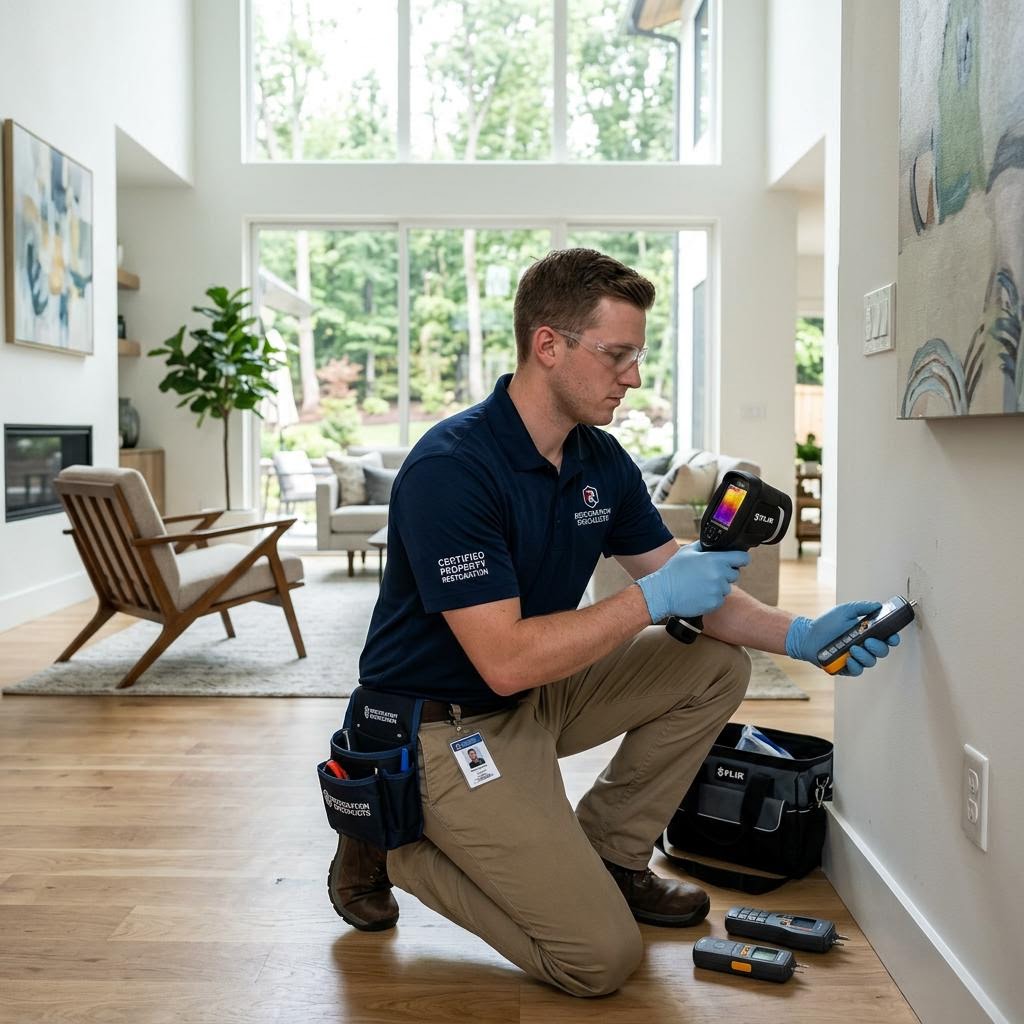
Warm South Florida conditions and persistent moisture can support growth on paper-faced drywall, wood components, dust, and other organic material. A small visible area may be connected to dampness beyond the exposed finish, particularly after ground-level water has spread behind baseboards or beneath cabinets. A musty odor, staining, softened drywall, or visible mold-like growth can indicate that a moisture problem deserves professional attention. These signs do not establish the full extent by themselves, but they help identify where a controlled remediation plan may be needed.
The practical goal is not simply to change the appearance of a surface. Remediation addresses affected material while limiting dust and debris from moving into other rooms. The source also matters. Cleaning an area without correcting a leaking fixture, rain opening, condensate backup, or lingering water damage leaves the building condition unresolved. Titan considers remediation, moisture correction, drying, and eventual repair as connected parts of one property-focused process.
Property Clues Worth Taking Seriously
Riviera Beach property owners may notice visible mold-like growth near wall bottoms, dark or irregular discoloration around an air handler closet, a recurring musty odor, swollen trim, peeling finishes, or water marks below a window or ceiling. Damp cabinet interiors and changes along flooring edges can also follow a plumbing release. In an apartment, condominium, or commercial suite, a mark on one level may relate to water from another area. Professional help is appropriate when the condition is broad, concealed, recurring, or connected to significant water damage.