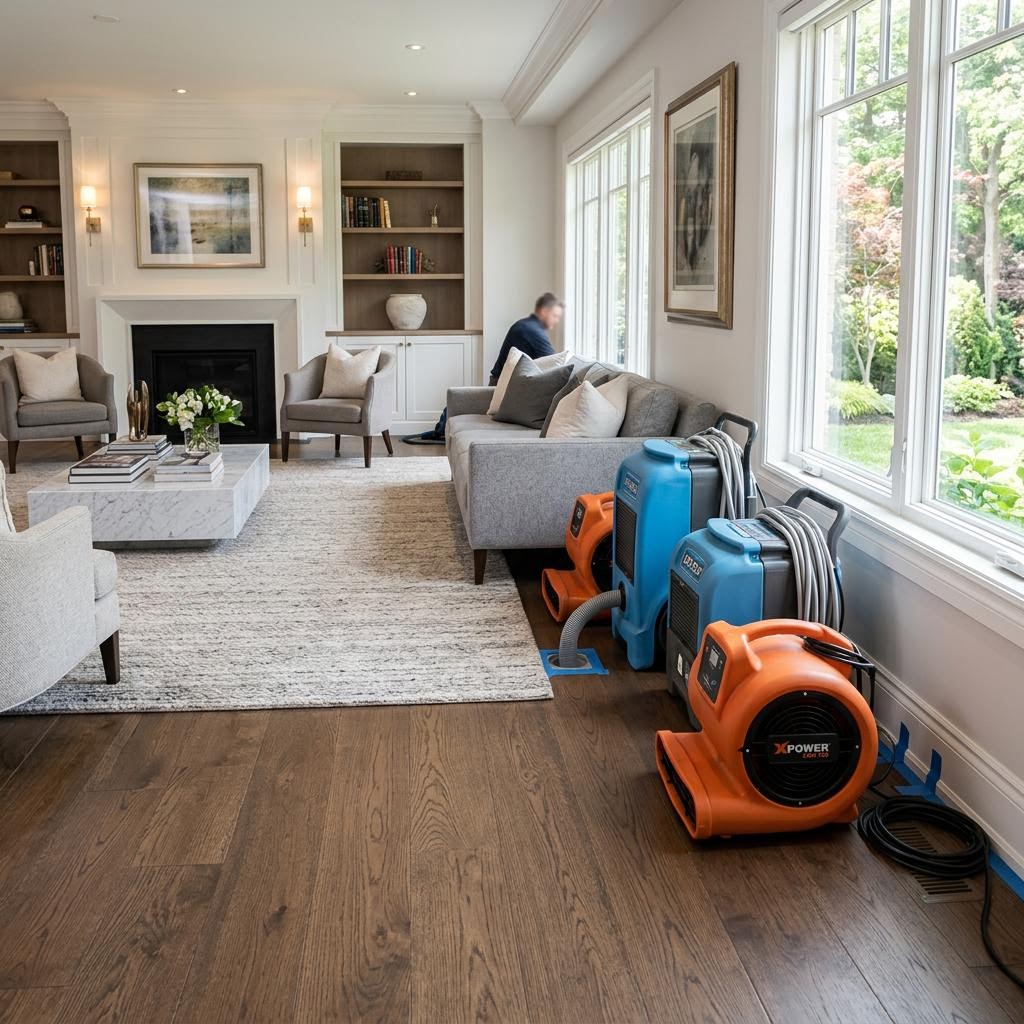
Moisture, Warmth, and Finished Assemblies
South Florida warmth can support growth when drywall paper, dust, wood products, or other organic material remains damp. Modern finishes can make the moisture path difficult to see. Water below plank flooring may extend into another room, and moisture at a cabinet toe kick may continue behind the cabinet box. A ceiling mark below air-conditioning equipment may also represent a wider damp area above the visible finish.
Growth is a building-moisture issue, so remediation cannot be separated from the reason the area stayed wet. A blocked condensate line, intermittent appliance drip, exterior opening, or plumbing connection can repeatedly introduce moisture. Titan organizes the project around affected material control and the repair of that underlying condition, then allows suitable drying before removed finishes are replaced.
Signs Hidden Moisture May Be Affecting Finishes
A musty odor near a cabinet, visible mold-like growth on drywall, darkened trim, a recurring ceiling mark, lifted flooring, or softness at a wall base can point to an ongoing or previous moisture event. In condominiums and offices, a symptom can appear away from the originating fixture or roof area because water travels through connected assemblies. These observations warrant professional attention without treating appearance alone as a definitive identification.