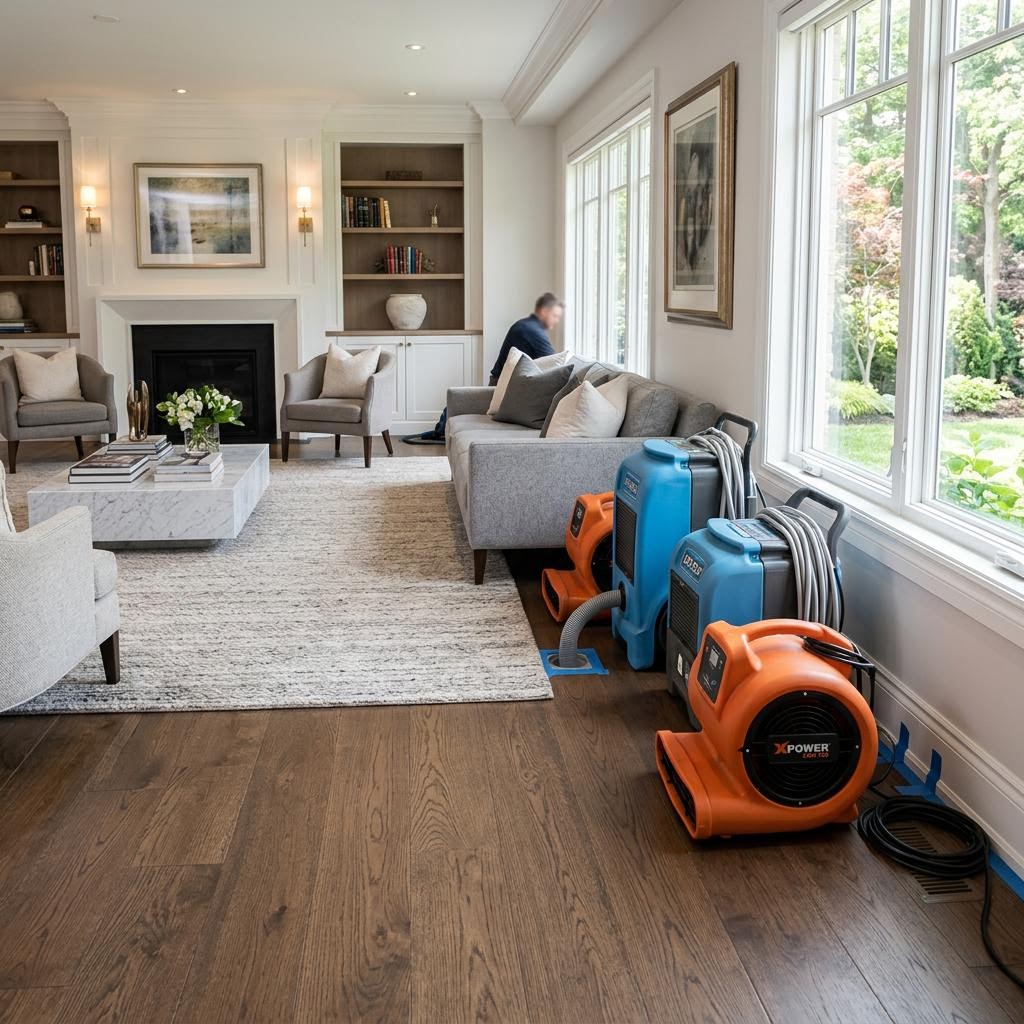
Moisture, Warmth, and Mixed Building Assemblies
Mold growth needs moisture, and Lake Worth Beach buildings offer many possible pathways for water to reach organic material. A slow fixture leak can damp the paper face of drywall behind a vanity. Rain entering at a window may travel behind trim. Water beneath a raised floor can affect wood components even when the finished surface above has dried. Warm conditions and limited airflow in these cavities can allow visible mold-like growth or musty odors to appear after the original event.
Mixed construction can make a one-size approach ineffective. Masonry may border framed partitions, or a remodeled floor may bridge rooms that once had separate finishes. Moisture can move along those connections and collect at transitions. Professional remediation distinguishes between porous material that may require removal and durable material that may remain for detailed cleaning. It also preserves the link between the affected area and the leak, drainage issue, exterior opening, or humidity pattern that contributed to it.
Changes in Finishes That May Point to Hidden Dampness
Watch for visible mold-like growth, musty odors that persist when a room is aired out, paint that bubbles again, darkened wall edges, warped cabinet backing, lifted floor material, or baseboards that swell. Repeated staining below a window or ceiling junction can also signal ongoing entry. These observations are reasons to address the property condition carefully, not a basis for a medical conclusion or a definite identification by sight.