Hurricane Damage Restoration Lake Worth Beach FL
Hurricane damage restoration planning for a Lake Worth Beach, Florida property
Residential and Commercial Hurricane Restoration

Hurricane Damage Restoration in Lake Worth Beach, FL

Titan Restoration Construction delivers Hurricane Damage Restoration in Lake Worth Beach, Florida for residential and commercial properties with hurricane-related water and property damage. The work connects cleanup, drying, repairs, and reconstruction in one condition-based plan. Hurricanes and tropical storms can force wind-driven rain through exterior openings or areas affected by roof and exterior damage. Titan traces interior moisture, removes materials selectively, and rebuilds affected finishes. Hurricane Damage Restoration covers the combined consequences of a tropical system, while Wind Damage Restoration remains a distinct service centered on damage directly caused by wind.

A Local Plan for Mixed-Era Lake Worth Beach Buildings

Lake Worth Beach includes older cottages near downtown, masonry homes, raised wood-floor construction, small multifamily properties, condominiums, and storefronts along active commercial streets. Renovations often place modern flooring, cabinets, and wall finishes over earlier assemblies. During a hurricane, water entering at an exterior opening can move between those layers or descend into the ceiling of a lower unit. Titan plans moisture evaluation, removal, drying, and repair around the building actually encountered, with particular attention to transitions between original rooms, later additions, and remodeled interiors.

Review Titan's Hurricane Damage Restoration service or visit the Lake Worth Beach service area page. Hurricane restoration addresses the wider storm loss, while Lake Worth Beach Wind Damage Restoration remains a separate service focused on wind forces.

Finding Water Within Mixed Construction

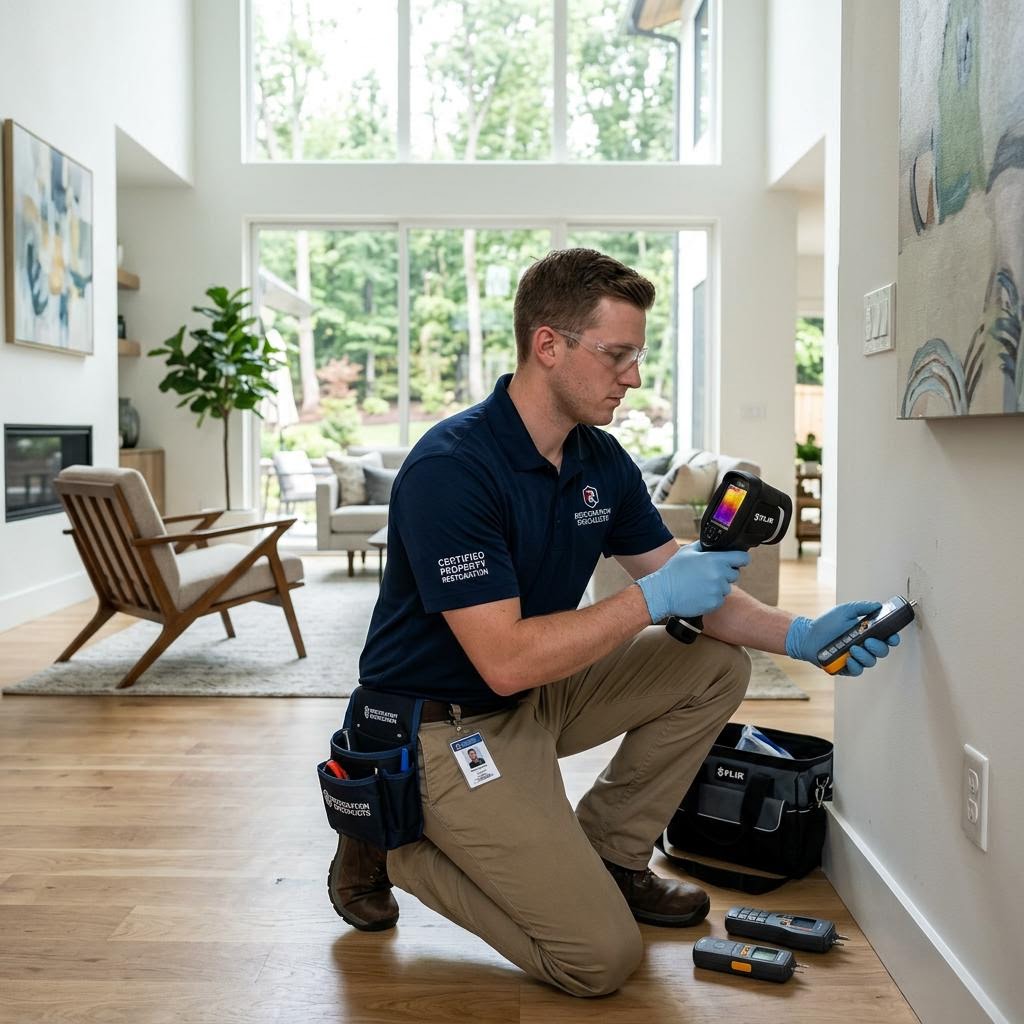
Visible water may be only one part of a Lake Worth Beach storm loss. Moisture can pass beneath newer plank or tile flooring, reach an older subfloor, collect behind kitchen cabinets, or follow an addition joint into a neighboring room. In apartments and other multifamily buildings, it can also move around penetrations into walls or ceilings below. Titan uses extraction where appropriate and moisture detection to map the affected materials.

Structural drying and dehumidification are then adjusted to the assembly and exposure. Painted masonry, wood subfloors, drywall, insulation, and finish layers do not dry in the same way. Repeated evaluation helps determine whether materials can remain, need more focused drying access, or should be selectively removed so concealed spaces can be addressed before reconstruction. Learn about Titan's Water Damage Restoration service and Lake Worth Beach water damage restoration.

Reviewing Openings Before Interior Repairs

Older windows, doors, vents, wall penetrations, storefront edges, and connections between additions can admit wind-driven rain during severe tropical weather. A storm-created opening at a roof or exterior surface can produce a separate entry route. Titan considers these visible pathways when sequencing interior restoration and can perform appropriate stabilization within its scope. Roof and exterior damage still requires suitable separate evaluation.

Why Horizontal Rain Changes the Water Path

Ordinary rainfall and hurricane-driven rainfall do not expose a building in the same manner. Strong wind can push water against vertical surfaces and through small perimeter gaps. In a Lake Worth Beach cottage, the first sign may be damp plaster-related finishes or a wet floor edge. In a storefront or apartment, water may spread behind a finished wall. The restoration boundary must follow measured moisture rather than the shape of the visible mark.

Cleanup That Respects Original and Remodeled Materials

Interior storm cleanup may include removal of loose debris, extraction, cleaning of suitable durable surfaces, and controlled removal of damaged porous products. Titan evaluates ceiling material, drywall, insulation, trim, flooring, cabinet components, and wall finishes individually. Where a new material covers an older layer, focused access may be needed to determine whether trapped moisture remains. Selective removal avoids unnecessary demolition while allowing affected assemblies to be dried and prepared for repair.

Organizing the Property Before Restoration Continues

Water entry and damaged finishes can make it necessary to establish a stable work area before detailed drying or removal. Titan evaluates reasonable stabilization based on observed storm conditions, protects suitable retained surfaces, and sequences interior tasks around any unresolved exterior entry path. This work creates practical conditions for the restoration activities that follow without substituting for specialized exterior evaluation.

Drying Raised Floors, Walls, and Finish Layers

A raised wood floor can hold moisture below the visible finish, while a masonry wall with interior furring can conceal damp wallboard or insulation. Layered remodels may create additional boundaries. Titan combines dehumidification, targeted drying, moisture detection, and selective access according to the materials involved. The aim is to dry retainable assemblies and clearly identify components whose condition supports removal and replacement.

Moisture Control and Mold Risk

Lake Worth Beach remains warm and humid after tropical weather, so unresolved dampness can create conditions favorable to mold growth. Extraction and drying reduce that risk, while inspection of porous materials helps identify visible growth or other conditions needing remediation. Titan bases mold-related work on findings within the affected area. Wet materials are not automatically described as mold-damaged, and mold is discussed as a property restoration issue without exaggerated health statements. When conditions warrant, review professional mold remediation and Lake Worth Beach mold remediation.

Repairing Transitions Between Old and New

Reconstruction may include drywall, ceiling finishes, flooring, baseboards, trim, paint, cabinets, kitchens, bathrooms, and commercial interior components. In mixed-era properties, repair planning considers differences in material thickness, floor height, opening dimensions, and retained finishes so the new work properly meets the portions that remain.

Because Titan performs restoration and construction, knowledge developed during moisture mapping, opening, and drying can carry into rebuilding. The repair scope can respond to the layers uncovered instead of beginning with assumptions. This connection is valuable in older Lake Worth Beach buildings where a small surface area can contain several generations of material. Explore Titan's Construction & Rebuild services.

Residential Recovery Across Varied Housing Types

Titan works with Lake Worth Beach cottages, single-family homes, apartments, condominiums, townhomes, and small multifamily residences. A project can involve water below a raised floor, a damp ceiling beneath another unit, an affected kitchen addition, or bedrooms connected by a short hallway. Residential planning accounts for compact layouts, occupied areas, and the need to preserve suitable original or remodeled finishes.

Hurricane Cleanup for Storefronts and Workplaces

Storefronts, restaurants, offices, and other commercial interiors may take on water at glazing, doors, roofs, walls, or utility penetrations during a tropical system. Titan evaluates flooring, partitions, ceilings, fixtures, storage spaces, and customer areas, then coordinates extraction, drying, selective removal, and reconstruction around the supported damage boundary and business layout.

Local Restoration and Construction Experience

Titan Restoration Construction has 20+ years of restoration and construction experience in Palm Beach County. Titan is licensed and insured, 5-star rated, and A+ BBB rated. Owners can work with one company for connected hurricane cleanup, moisture management, interior repair, and reconstruction needs.

Lake Worth Beach Hurricane Damage Restoration FAQs

How does a raised floor change hurricane drying in Lake Worth Beach?

Water may affect the finish, subfloor, and cavity below. Moisture detection and suitable access help determine where extraction, drying, removal, and eventual floor repair are needed.

Can storm water become trapped behind a remodeled wall?

Yes. New finishes, furring, older wall materials, and enclosed transitions can conceal moisture. Titan evaluates those layers and uses focused access when conditions support it.

What can be restored after wind-driven rain enters a storefront?

The answer depends on moisture and physical damage to flooring, partitions, ceilings, fixtures, and durable finishes. Retainable materials may be cleaned and dried, while damaged components may require selective removal and reconstruction.

Does Titan automatically remove every material that gets wet?

No. Material type, water exposure, physical condition, drying response, and access all inform the decision. Removal is limited to the supported restoration scope.

Can Titan reconstruct an older interior after hurricane cleanup?

Yes. Titan provides restoration and construction and can repair drywall, ceilings, flooring, trim, paint, cabinets, and other included finishes after cleanup and drying are complete.

Build a Recovery Plan for Lake Worth Beach

Contact Titan Restoration Construction about hurricane water intrusion and property damage in a Lake Worth Beach residence, multifamily unit, or commercial space. A focused discussion can connect the observed entry path and affected materials with cleanup, drying, selective removal, repairs, and reconstruction.