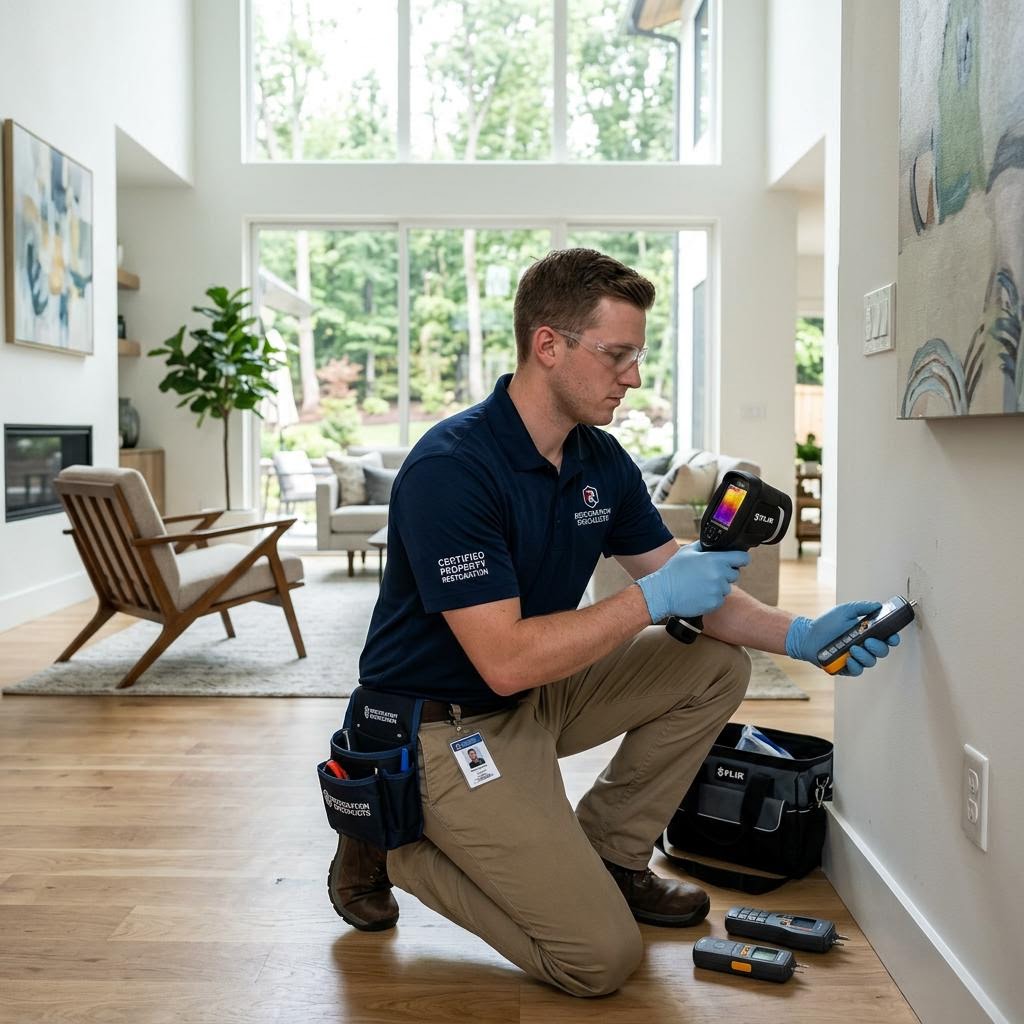
Why Coastal Exposure and Indoor Moisture Must Be Separated
A coastal setting can place greater weather pressure on exterior openings, yet the immediate cause of indoor growth may be an ordinary plumbing or condensate issue. Water around a sliding door can wet drywall edges and baseboards. An upper-unit fixture leak can affect a ceiling below. A drain backup at an air handler can keep an enclosed closet damp. Warm conditions then give moisture-affected organic materials an environment where visible mold-like growth may develop.
Condensation can also form where humid air reaches a cool surface, particularly around supply components, exterior-facing walls, or closed rooms. That does not mean every coastal surface requires removal. Professional remediation separates materials that can be retained and cleaned from porous components that are too affected to remain. Just as important, it distinguishes wind entry from plumbing, HVAC, and indoor humidity causes so the corrective work addresses the right pathway.
Interior Signals Beyond an Obvious Roof Drip
A persistent musty odor near a sliding door, discoloration around an air-conditioning closet, visible mold-like growth at a baseboard, softened ceiling drywall, swollen trim, or recurring staining after heavy rain can indicate a moisture concern. In a condominium, changes at a ceiling or shared wall may relate to a source outside the immediate room. These signs warrant careful property-focused action without assuming that appearance alone gives a definite identification.