Hurricane Damage Restoration Juno Beach FL
Hurricane damage restoration planning for a Juno Beach, Florida property
Residential and Commercial Hurricane Restoration

Hurricane Damage Restoration in Juno Beach, FL

Titan Restoration Construction provides Hurricane Damage Restoration in Juno Beach, Florida for residential and commercial properties experiencing hurricane-related water and property damage. Cleanup, drying, repairs, and reconstruction are planned for the actual coastal building conditions. Hurricanes and tropical storms may drive rain through exterior openings or create interior exposure after roof or exterior damage. Titan addresses extraction, concealed moisture, affected materials, and rebuilding. Hurricane Damage Restoration considers multiple effects of the tropical system, while Wind Damage Restoration is kept distinct as work focused on damage specifically produced by wind.

Coastal Storm Restoration in Juno Beach

Juno Beach includes ocean-adjacent condominium buildings, waterfront and inland single-family homes, townhomes, and smaller commercial spaces. Open balconies, sliding glass door assemblies, broad window areas, utility openings, and exposed exterior walls can become important water pathways during a tropical system. In stacked buildings, water may move from a perimeter opening into floor edges or a ceiling below. Detached homes can have different routes through attic-adjacent materials, garages, and open living areas. Titan develops the scope around the particular structure and protects suitable stone, tile, glass, cabinetry, and other retained finishes.

Review Titan's Hurricane Damage Restoration service or visit the Juno Beach service area page. Hurricane restoration addresses the wider storm loss, while Juno Beach Wind Damage Restoration remains a separate service focused on wind forces.

Tracing Water in Coastal Homes and Condominiums

A wet area beside a sliding door may extend beneath flooring, behind baseboards, or into drywall at the perimeter wall. In a multilevel condominium, water can also follow penetrations or assembly edges and appear away from its entry point. In a single-family home, moisture may travel from a ceiling area toward cabinetry or an open living space. Titan combines extraction with moisture detection so the restoration boundary follows the water path.

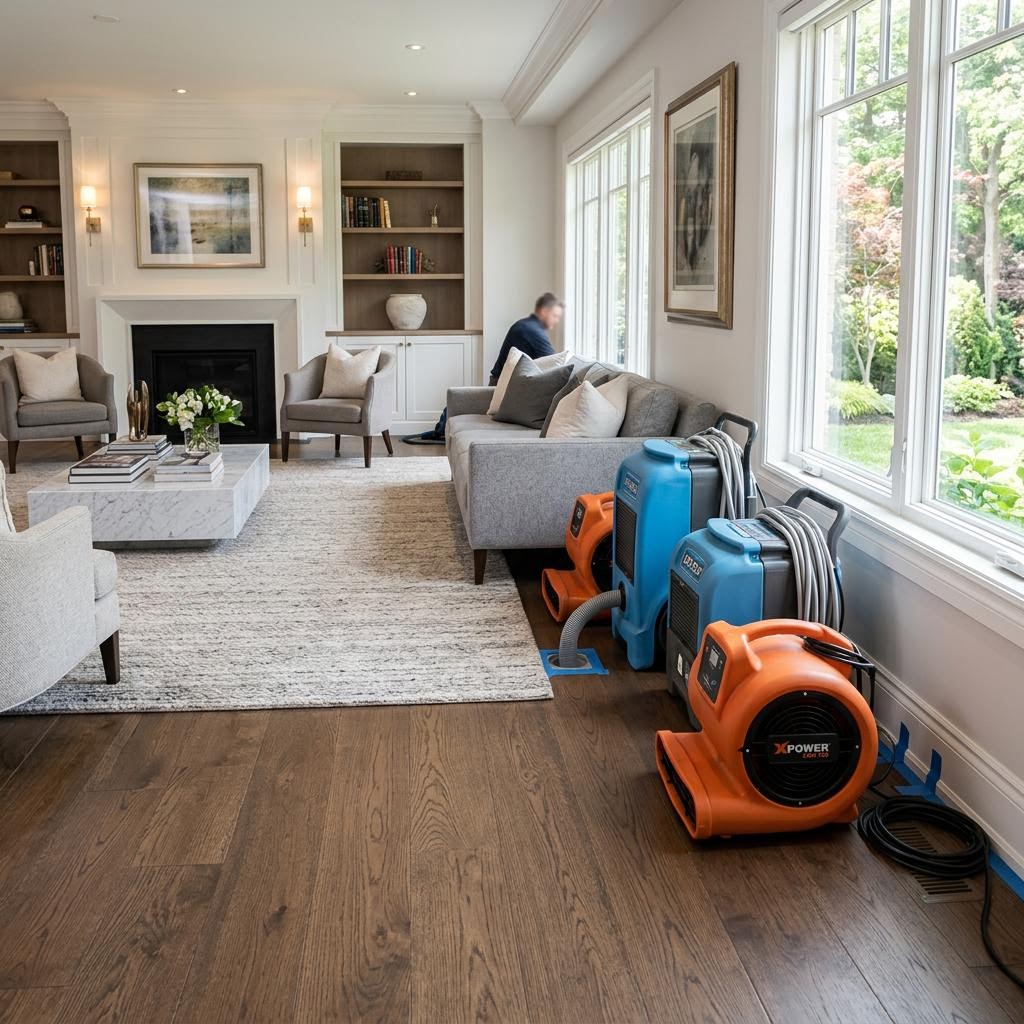
Dehumidification and structural drying are selected around the size, material, and accessibility of each affected area. Tile itself may tolerate water while underlayment, wallboard, trim, or cabinet materials nearby require closer review. Titan monitors the condition of retainable materials and uses findings to identify where selective access or removal is justified before finish repairs start. Learn about Titan's Water Damage Restoration service and Juno Beach water damage restoration.

Coastal Openings, Exterior Damage, and Interior Exposure

Hurricane winds can push rain against ocean-facing and other exposed walls, around doors and windows, and through damaged exterior components. If visible roof or exterior damage is present, the water entry route must be considered before interior finishes are rebuilt. Titan can coordinate reasonable stabilization within the restoration scope and document interior effects, while appropriate roof and exterior evaluation remains a separate need.

Wind-Driven Rain at Balconies and Perimeter Walls

Juno Beach condominiums and homes can receive sustained rain against balcony doors, window systems, and perimeter walls during tropical weather. Water that appears minor on tile can reach a wall base, flow under adjacent flooring, or damp a ceiling assembly below. Moisture readings and an understanding of the room layout help distinguish a cleanable surface condition from an affected concealed assembly that needs drying or access.

Protecting High-Finish Interiors During Cleanup

Coastal interiors commonly combine tile or stone, painted drywall, wood cabinetry, metal details, glass, and other finish materials. Titan separates durable components that may be cleaned and retained from porous or physically damaged materials that cannot reasonably remain. Selective removal may involve wall bottoms, insulation, ceiling sections, flooring layers, or cabinet parts. Work-area planning protects suitable adjacent finishes and keeps the removal boundary tied to observed storm effects.

A Controlled Start for Storm-Damaged Spaces

Before detailed restoration, loose materials, continuing exposure, and the condition of the work area must be considered. Titan identifies practical stabilization measures that fit its restoration and construction scope, coordinates interior access, and protects appropriate surfaces. The exact action depends on the property, the observed damage, safe access, and unresolved exterior conditions.

Dehumidification for Humid Coastal Conditions

Outdoor humidity near the coast can make passive drying unreliable, especially where water has entered drywall, flooring edges, insulation, or enclosed cabinet areas. Titan uses managed dehumidification, structural drying methods, moisture detection, and selective access based on the affected materials. Drying progress informs whether an assembly can remain or whether removal is needed to prepare a sound reconstruction area.

Addressing Mold Potential Without Assumptions

Storm water and prolonged humidity can create conditions in which mold may grow, particularly on damp porous products or inside enclosed spaces. Titan emphasizes moisture correction first and evaluates visible growth or suspect affected materials as the project is defined. Mold remediation can be incorporated when supported by conditions. A hurricane loss does not mean mold is present everywhere, and the scope avoids unsupported health conclusions. When conditions warrant, review professional mold remediation and Juno Beach mold remediation.

Detailed Reconstruction for Coastal Interiors

After cleanup, drying, and selective removal, Titan can reconstruct drywall, ceilings, flooring transitions, trim, paint, cabinetry, kitchens, bathrooms, and other included interior elements. Condominium work may require focused repairs around a perimeter wall or opening, while a house may involve a larger connected living area, garage transition, or several rooms.

Titan combines restoration and construction, preserving project knowledge from moisture mapping through the finish phase. The locations opened for drying, the dimensions of retained stone or tile, and the condition of adjoining cabinets can all guide repair planning. This continuity helps rebuild the affected area while keeping the work focused on supported building conditions. Explore Titan's Construction & Rebuild services.

Restoring Juno Beach Homes, Townhomes, and Condos

Residential Hurricane Damage Restoration can address condominium units, townhomes, and detached residences affected near windows, balconies, bedrooms, kitchens, garages, or open living areas. Titan adapts protection, moisture evaluation, drying, and construction to compact stacked units as well as larger coastal houses, always using the documented property condition rather than a generic coastal scope.

Storm Recovery for Juno Beach Commercial Spaces

Offices, retail interiors, and other local businesses can experience water intrusion through glazing, entry doors, exterior walls, ceilings, and service penetrations. Titan identifies the affected area, removes water, dries materials, performs supported selective removal, and reconstructs interior partitions and finishes as needed. Planning considers customer areas, work rooms, storage, and retained durable surfaces.

A Palm Beach County Restoration and Construction Team

Titan Restoration Construction offers 20+ years of restoration and construction experience in Palm Beach County. Titan is licensed and insured, 5-star rated, and A+ BBB rated. The company can connect hurricane water cleanup and drying with interior repairs and reconstruction for coastal residential and commercial properties.

Juno Beach Hurricane Damage Restoration FAQs

Can water at a Juno Beach balcony door affect the unit below?

It can in some building configurations. Water may move around floor edges or penetrations, so the observed unit and any accessible related ceiling or wall conditions should be evaluated.

Why is tile not the only material checked after coastal rain enters?

Tile may be durable, but water can reach grout edges, wall bottoms, underlayment, adjacent flooring, trim, and cabinets. Moisture detection helps identify those less visible conditions.

How are stone and glass protected during hurricane cleanup?

Titan defines work areas and uses condition-appropriate protection for suitable retained finishes while removing or drying affected materials nearby. The approach depends on access and the project scope.

Why should roof or exterior damage be evaluated before interior rebuilding?

The source of water entry can affect restoration sequencing. Appropriate separate evaluation of roof and exterior conditions should be coordinated before affected interior assemblies are permanently closed.

When can reconstruction begin after water enters a coastal wall?

Reconstruction follows extraction, moisture evaluation, necessary removal, and drying. The assembly conditions should support closure before drywall, trim, paint, or other finishes are installed.

Discuss Hurricane Damage at Your Juno Beach Property

Contact Titan Restoration Construction for a property-specific discussion of storm water, moisture detection, drying, damaged interior finishes, and reconstruction in Juno Beach. The next steps can be organized around the entry route, building type, affected materials, and work needed to restore usable rooms.