Why Indoor Growth Can Follow a Water Problem
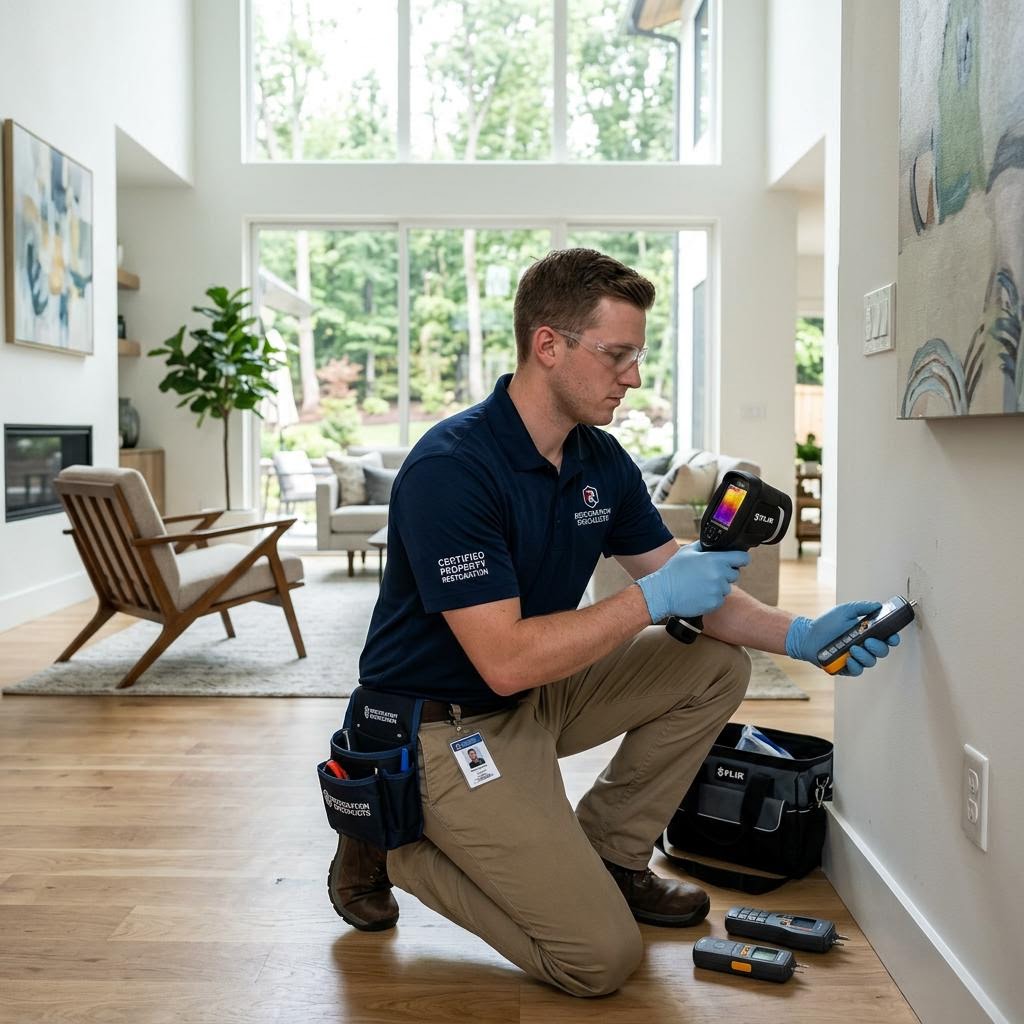
Warm South Florida weather and persistent humidity make moisture control important throughout the year. Drywall paper, wood trim, cabinet components, and some floor materials can retain water after the visible surface appears dry. When an air conditioning drain backs up in a closet or a washing machine release reaches a wall edge, dampness may continue inside the assembly and support mold-like growth.
The shape of a Boynton Beach property changes how the condition develops. Water in a townhome may move beside a shared partition, while a slab-level release in a detached home can extend below connected flooring. A remediation plan should follow the actual affected area, not simply the first stain or odor noticed in the room.
Clues That Point to a Moisture-Related Concern
Visible mold-like growth, a persistent musty odor, discolored drywall, swollen baseboards, cabinet damage, or recurring ceiling marks can indicate a condition that needs professional attention. A previous leak and materials that remain damp are also meaningful clues, even when the original water is no longer visible.