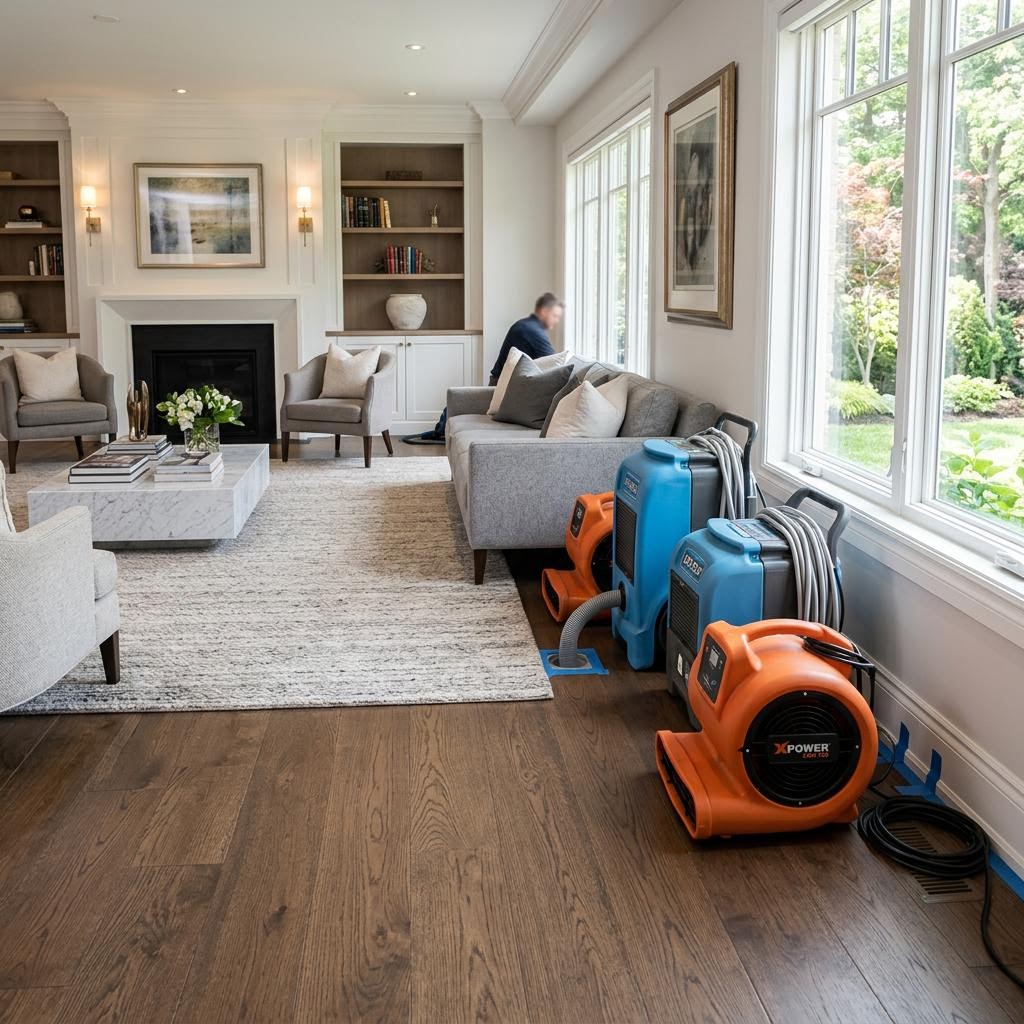
Why New Materials Are Not Immune to Moisture
The age of a home does not prevent mold-like growth when materials remain damp. Paper-faced drywall, engineered wood products, cabinet panels, and dust can support growth after an appliance leak or concealed plumbing release. Continuous finishes may allow water to travel into an adjacent room without an obvious surface boundary. A small change at a baseboard or cabinet toe kick can therefore relate to a wider moisture path beneath or behind the finish.
Westlake remediation should distinguish between materials that need removal and surfaces that can be retained and professionally cleaned. Containment and HEPA filtration help manage the work when the rest of an open living area remains unaffected. Equally, the appliance connection, plumbing component, cooling-system drainage issue, or storm opening must be corrected. Remediation and source repair work together; neither should be treated as a substitute for the other.
Changes Around Built-Ins and Connected Floors
Owners may notice visible mold-like growth inside a sink cabinet, a musty odor near a laundry or air handler closet, lifting or changes at floor joints, swollen baseboards, discoloration beside an appliance, or staining near a garage or attic transition. A slow connection leak may remain concealed until a cabinet panel changes shape. After storms, ceiling marks or damp insulation can point to an exterior opening that also needs building repair.